
Case study
In today’s fast-paced sports media landscape—covering live broadcasts, highlights, social content, and digital clips—speed is everything. Fans demand instant access to highlights, analysis, and breaking news across multiple platforms, and for broadcasters, leagues, and team media operations, being first can make all the difference in engagement and revenue.
Vidispine is helping reshape this landscape. Traditional workflows have long been slowed by a key bottleneck: rendering, the process of generating final video files before they can be reviewed, approved, or broadcast. With Vidispine’s Web Render Engine and renderless workflows, sports media production is dramatically accelerated, enabling faster content creation, approval, playout, and distribution.
Sports content production faces a set of unique and demanding challenges:
Live & fast turnaround requirements
-
Sports coverage generates vast amounts of footage from live events.
-
Editors must produce highlight reels, instant replays, post-game summaries, and social shorts within minutes — sometimes during the event itself.
-
Traditional editing systems require time-consuming rendering after edits, causing delays in getting content on air or online.
Collaborative, distributed teams
-
Production teams often include editors, producers, and directors working across on-site facilities and remote locations.
-
Waiting for file renders hinders simultaneous collaboration and slows down decision-making.
Resource & format constraints
-
Rendering consumes significant computing resources and ties up expensive hardware.
-
Broadcasters need to handle multiple resolutions (e.g., 1080p, 4K) and platforms (linear TV, OTT, web, mobile), each with different delivery requirements — further complicating workflows.
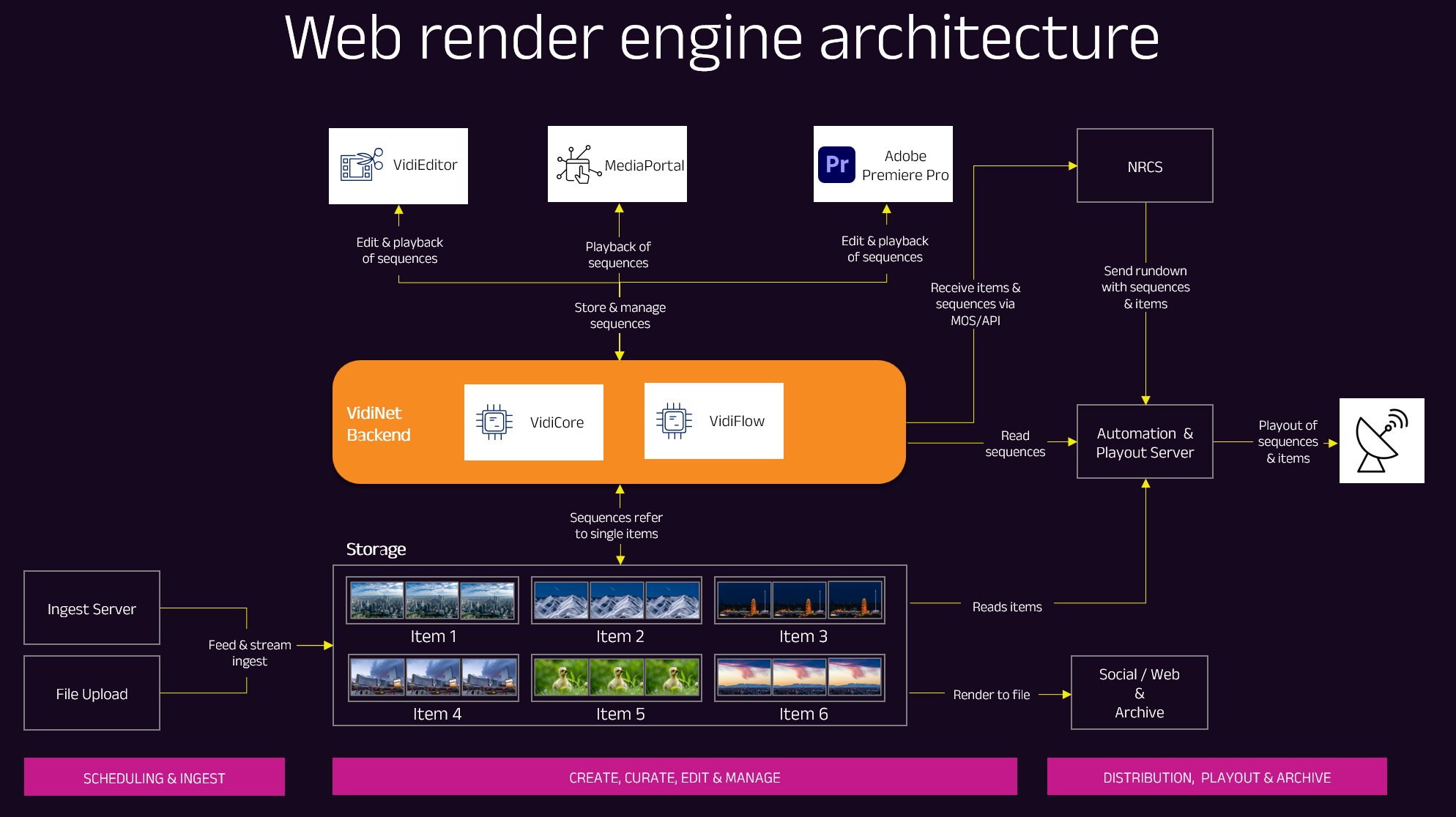
In a renderless workflow, video edits and sequences aren’t processed into new physical video files before playback or playout. Instead:
-
Edits are stored as metadata, representing clips, cuts, transitions, and other timeline decisions.
-
Multiple editors can work simultaneously on the same project without waiting for rendering steps.
-
Playback systems interpret this metadata in real time to produce the final output without producing redundant intermediate video files.
This model eliminates the traditional “create-then-render” bottleneck and shifts the emphasis to instant, metadata-driven editing and playout.
Accelerated production & instant content delivery
Renderless systems allow editors to preview, adjust, and finalize sequences immediately, with no rendering wait times:
-
Teams can produce and broadcast highlight reels, scoring summaries, and instant clips in real time.
-
Media outlets can be first to air or first to post on digital platforms — crucial in capturing fan engagement.
Real-time collaboration anywhere
Because only metadata changes are stored, multiple users can work on the same project at the same time, regardless of location:
-
Producers, editors, and graphics teams see changes instantly.
-
Remote workflows become seamless, essential for global sports properties.
Efficiency & reduced resource drain
Traditional rendering is compute-intensive. Renderless workflows:
-
Remove the need for repeated file creation and storage.
-
Minimize resource usage, allowing teams to focus on editing and storytelling rather than managing rendering queues.
Flexible live & post-game output
Renderless workflows support:
-
Live playout — sequences can be played back even while ingest or editing continues.
-
Dynamic content updates — last-minute changes (e.g., updated graphics, audio tweaks) can be made and seen instantly without delay.
Scalable and integrated with modern tools
Renderless platforms integrate with industry editing tools (e.g., Adobe Premiere Pro) and production servers:
-
Editors can use familiar NLE interfaces while benefitting from metadata-driven backend acceleration.
-
This ensures both modern collaborative workflows and compatibility with existing production environments.
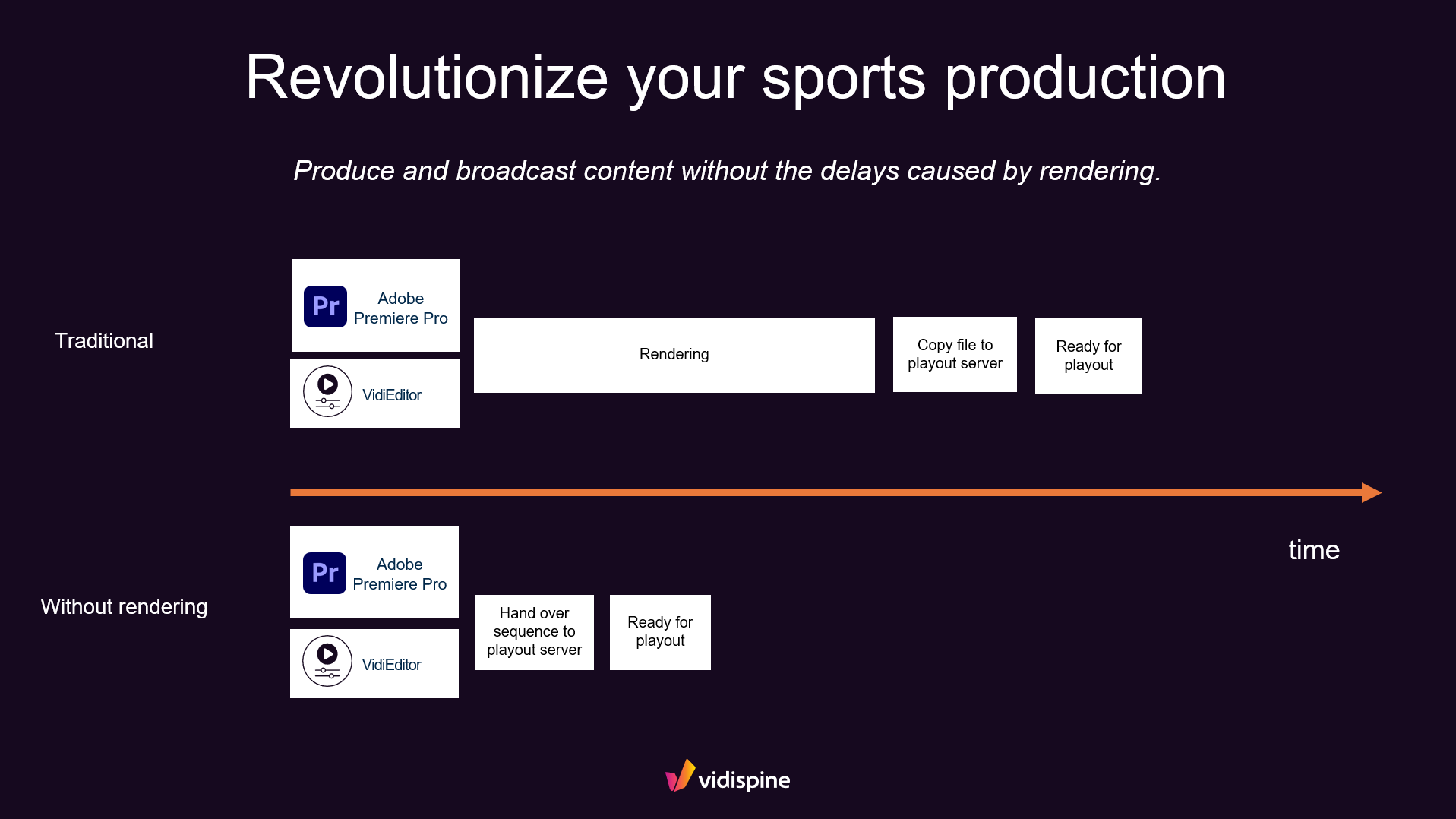
For sports leagues, broadcasters, and team media outlets, adopting renderless workflows means:
Before renderless:
- Wait for files to render before review/playout
- Editors work sequentially
- High computing cost for rendering
- Delays in delivering content
After renderless:
- Instant playback of edited sequences without rendering
- Multiple editors work simultaneously in real time
- Efficient use of resources; fewer bottlenecks
- Faster time to air and online across all channels
This transition fundamentally changes how sports content is produced — from a linear, render-dependent process to a fast, collaborative, metadata-driven pipeline that supports the intensity, immediacy, and competitive nature of sports media.
In today’s sports media landscape, speed defines success. Vidispine’s Web Render Engine sets the standard for renderless workflows, eliminating traditional production bottlenecks through powerful, metadata-driven editing. Media teams can respond instantly to live events and audience demand—without compromise.
By removing the need for time-consuming rendering and enabling true real-time collaboration, Vidispine empowers sports organizations to deliver live highlights, breaking clips, and post-game content faster, smarter, and with maximum impact.
Get in touch with our Media Experts
Learn more about media asset management and Vidispine's solutions.
Contact us today and we will answer any questions you might have and help you get started!




You May Also Be Interested In
Vidispine's applications for rights management & scheduling helps you maximize ROl on your own IP or purchased rights. Read more here & book a demo!
The Avatega media solution supports the innovative German TV group Constantin Medien in their quest to keep audiences engaged across all platforms.
Shaw Media (since 2016 Corus) selects Avatega and AdStore from Arvato Systems for Non-Linear Schedule and Ad Sales Management